
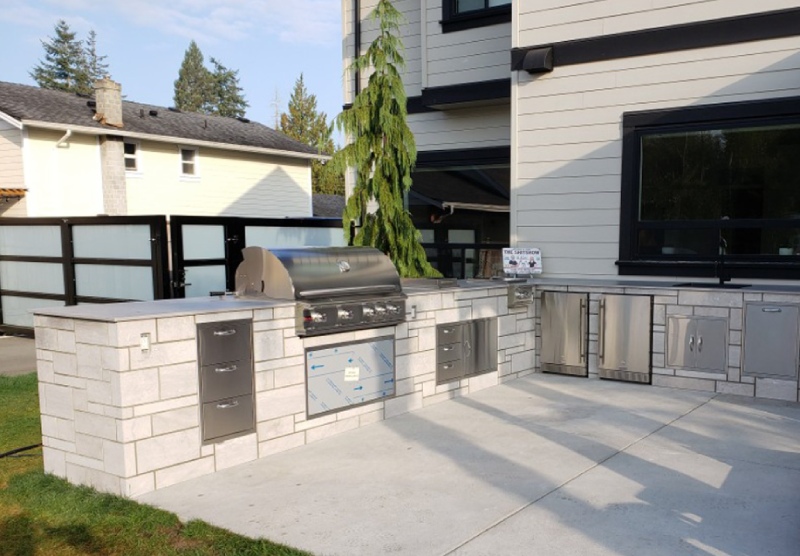
A DIY outdoor kitchen is a cooking and entertaining space that a homeowner designs, procures, constructs, or installs without full professional assistance. Although an outdoor kitchen built by yourself might seem cheaper initially, the actual cost may include utilities, permits, weatherproofing, tools, delivery, appliance clearances, and repairs.
Key Takeaways:
- The cost of a DIY outdoor kitchen may be higher than anticipated since the overall cost includes utilities, equipment, transportation, weatherproofing, and potential rework.
- Usually, the most significant hidden expenses for outdoor kitchen projects are related to gas, electrical, plumbing, drainage, ventilation, and appliance clearance requirements.
- Outdoor kitchen errors can diminish safety, shorten the lifespan of appliances and make the space more difficult to use.
- An expert outdoor kitchen designer can assist in designing a plan that will accommodate your cooking patterns, backyard, weather, and future budget.
- In Langley and the Fraser Valley, outdoor kitchens must be weatherproof, feature outdoor-rated products, and be designed with BC’s weather conditions in mind.
What Is a DIY Outdoor Kitchen?
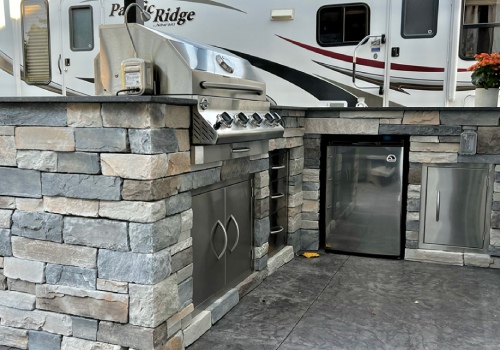
A homemade outdoor kitchen is a backyard cooking space built or assembled by a homeowner using purchased components, materials and appliances. It can feature a grill, prep counter, cabinets, storage, lighting, sink, fridge, pizza oven, or fire feature.
An outdoor kitchen can be a basic setup, such as a freestanding barbecue and a prep cart, or elaborate, such as an in-built grill station, stonework, utilities, and cabinets. The more enduring the design, the more significant the planning becomes.
A DIY outdoor kitchen is built without a complete professional design and installation, which may pose a greater risk when gas, electrical, drainage, ventilation, or structural work is involved.
How Do You Build a DIY Outdoor Kitchen?
The construction of a DIY outdoor kitchen typically begins with layout planning, appliance selection, base construction, cabinet or frame installation, countertop selection, and utility planning. The expense increases when homeowners do not consider the technicalities that go into the finished appearance.
An outdoor kitchen, as a simple DIY project, can be very simple, yet the costly components can be concealed. These services could include outdoor-rated cabinets or non-combustible materials, adequate clearances around the grills, level surfaces, safe access to electrical facilities, licensed gas work, drainage, weather protection, and delivery assistance.
The most common DIY outdoor kitchen mistake is buying the grill first and then trying to build everything around it. A better approach is to lay out the cooking area, prep space, seating, traffic flow, storage and heating requirements together.
Consider the entire outdoor living area and purchase individual items. Your BBQ, pizza oven, firetable, patio heater, counters, and storage must be part of a single layout rather than individual components.
Why Are DIY Outdoor Kitchens So Expensive?
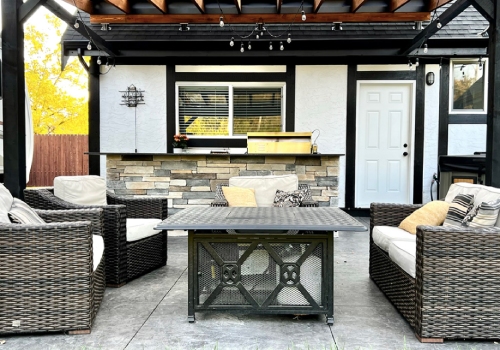
Do-it-yourself outdoor kitchens are costly because the visible items do not represent the full cost of the project. The real budget often includes site preparation, weatherproof materials, utilities, permits, tools, delivery, specialty hardware, appliance protection, and corrections. Statistics Canada reported that Residential renovation costs in Canada rose 0.9% in Q2 2025, after a 0.3% increase in Q1.
Many homeowners start by asking, “How much does an outdoor kitchen cost?” but the better question is, “What is included in the total outdoor kitchen cost?” A grill and cabinets are only the beginning.
Common Hidden Costs of Outdoor Kitchen Projects
- Outdoor-rated cabinets and finishes
- Non-combustible backing around grills
- Electrical work for lighting or refrigeration
- Gas line planning by qualified professionals
- Drainage and weather protection
- Countertop fabrication and installation
- Delivery, lifting, and setup fees
- Covers, accessories, and maintenance products
- Fixing mistakes after materials fail outdoors
The hidden costs of outdoor kitchen projects typically arise from treating the area as a kitchen. Outdoor kitchens are exposed to rain, temperature fluctuations, wind, grease, moisture, and heavy traffic, so indoor materials break down easily.
DIY vs Professional Outdoor Kitchen: Which Costs More Long-Term?
The choice between DIY and professional planning for an outdoor kitchen comes down to short-term cost savings and long-term durability. A DIY installation can be cheaper initially, but a professional design can help avoid costly outdoor kitchen setbacks and create a safer, more lasting space.
Professional assistance is especially in demand when your project includes embedded grills, gas appliances, electrical connections, stonework, outdoor refrigeration, covered structures, or custom cabinetry. These elements influence safety, appliance performance, and durability.
At R.E. MacDonald, our outdoor kitchens are designed for homeowners who want a kitchen customized to their lifestyle. Our team can also help integrate the kitchen with outdoor living products such as BBQs and grills, firetables, patio heaters, and other backyard comfort items.
What Are the Biggest Outdoor Kitchen Mistakes to Avoid?
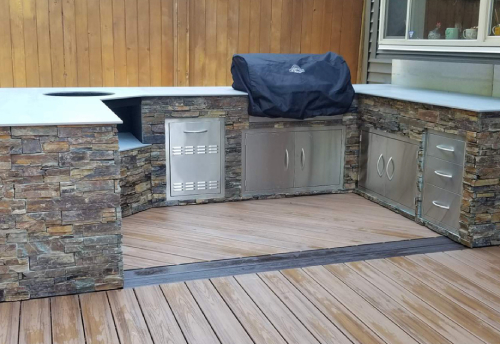
The most common outdoor kitchen mistakes to avoid include underestimating the budget, using indoor materials, not accounting for clearances, not planning enough counter space, and not considering how the space will be used in real weather conditions.
Even a gorgeous outdoor kitchen can still be aggravating when the grill is too far from the prep area, the counter is too small, the cabinets bloat during wet seasons, or the seating encroaches on the cooking area.
Outdoor Kitchen Mistakes to Avoid
- Using indoor cabinets outside
- Placing appliances without proper clearance
- Forgetting storage for tools, covers, and fuel
- Skipping task lighting
- Ignoring wind direction and smoke flow
- Choosing surfaces that stain or crack outdoors
- Leaving too little landing space beside the grill
- Not planning for rain, cold evenings, or seasonal use
Outdoor kitchen mistakes are often costly because they are built into the structure. Moving a grill, changing a countertop, or replacing damaged cabinets can cost more than planning correctly from the start.
What Are the Best Outdoor Kitchen Choices for BC Weather?
The best outdoor kitchen choices for BC weather include outdoor-rated appliances, durable cabinets, weather-resistant countertops, proper covers, good drainage, and a layout that performs well in rain and cooler seasons. In the Fraser Valley, moisture and seasonal temperature changes should inform the design.
Annual weather data show that Langley recorded 1,607.4 mm of total precipitation in 2024, which reinforces the need for outdoor-rated cabinets, covers, drainage, and durable countertops.
For Langley and nearby communities, outdoor living is not just about summer grilling. Patio heaters, firetables, covered cooking areas, and quality BBQ equipment can make the space more comfortable for more months of the year.
R.E. MacDonald’s outdoor living products include custom outdoor kitchens, premium grills, firetables, and patio heaters. Our patio heater options can also help homeowners extend the use of their backyard beyond warm afternoons.
Why Work With Outdoor Kitchen Builders in Langley or Fraser Valley?
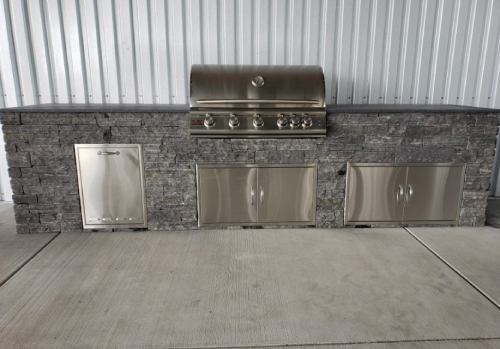
Working with outdoor kitchen builders in Langley or the Fraser Valley helps homeowners plan for local weather, select products, ensure appliance performance, and ensure safe installation. Local experts understand how backyard spaces are used in BC.
When you are seeking outdoor kitchen builders in Langley or a custom outdoor kitchen in the Fraser Valley, you must aim for more than a pretty grill station. What you want is a layout that fits your house, withstands the weather, has safe utility planning, and is comfortable for cooking and entertaining.
Conclusion
A DIY outdoor kitchen may seem inexpensive at first; however, the expenses add up when you factor in utilities, materials, weatherproofing, installation, and rework. The most sensible approach is to determine where DIY is reasonable and where professional planning will save you money. At R.E. MacDonald, we assist the people of Langley and the Fraser Valley in building outdoor living areas featuring BBQs, grills, outdoor kitchens, firetables, and patio heaters, all custom-fit. To plan a custom outdoor kitchen for your home, contact us today.
FAQs:
Can I build an outdoor kitchen myself?
Yes, one can self-build a basic outdoor kitchen so long as it uses freestanding items and does not require intricate gas, electrical, plumbing, or structural work. Professional assistance is typically safer and more reliable for built-in appliances, utility connections, stonework, or custom designs.
How much does a DIY outdoor kitchen cost?
The price of a DIY outdoor kitchen is determined by size, appliances, cabinets, counters, utility work, materials, and delivery. It can end up being more expensive than projected, as homeowners incur costs for tools, covers, permits, weatherproofing, licensed trades, and reworks when material or installation decisions go awry.
Is a DIY outdoor kitchen worth it?
A do-it-yourself outdoor kitchen may be justified for a small, simple setup with portable or modular components. Professional planning can be a worthwhile investment, especially for a permanent outdoor kitchen with built-in features such as a BBQ, refrigeration, gas, lighting, or custom counters.
What are the biggest outdoor kitchen mistakes to avoid?
Common outdoor kitchen mistakes include using indoor materials outdoors, neglecting ventilation, failing to account for appliance clearances, underestimating utility costs, and not providing sufficient counter space. These mistakes can make the kitchen less safe, less durable, and more costly to repair.
Do I need permits for an outdoor kitchen?
A permit or licensed trades may be required for your outdoor kitchen if gas, electrical, plumbing, drainage, or structural modifications are involved. Different localities and project types may have different requirements, and it is best to verify local regulations first.