
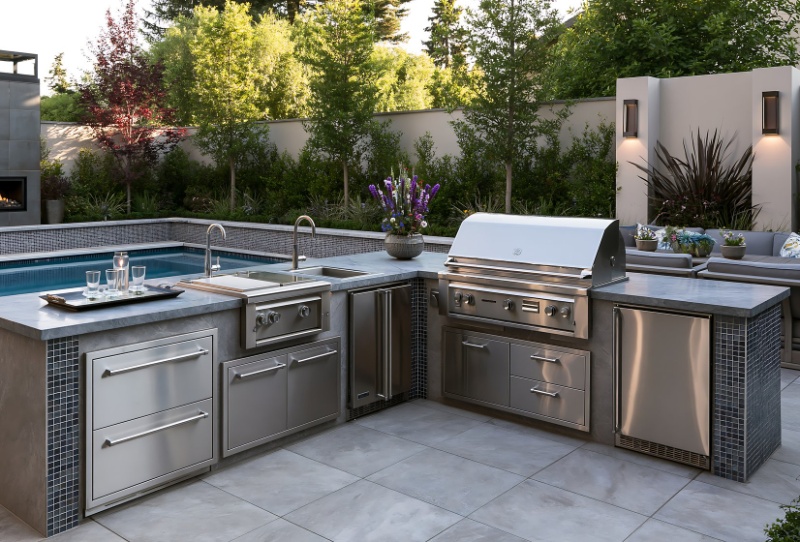
Comparing built-in vs freestanding outdoor kitchens starts with permanence: built-in designs integrate cooking and storage into a planned layout, while freestanding setups use separate appliances or cabinets. The right choice depends on your budget, available space, future plans, and how much construction your backyard can handle.
Key Takeaways
- Built-in kitchens integrate cooking and storage into a planned layout; freestanding setups keep appliances or cabinets separate.
- A simple freestanding setup usually requires less construction, but the complete specification determines the price.
- Freestanding does not always mean movable, especially when heavy counters or fixed utility connections are present.
- Both styles require suitable outdoor materials, safe appliance placement and a winter-care plan.
How Each Option Is Constructed and Installed
A built-in outdoor kitchen is a cooking area with appliances integrated into a planned island or cabinet layout. A freestanding outdoor kitchen uses self-supporting components, such as a barbecue on a cart beside a separate preparation counter.
Built-in does not necessarily mean a masonry project. Outdoor cabinetry can also create an integrated kitchen, with space for a suitable grill, storage and other appliances. Modular means the layout uses separate manufactured sections; it does not automatically mean the finished kitchen is portable.
For either approach, plan the project in this order:
- Choose the location and cooking equipment together. Check the manufacturer’s required clearances, which are the minimum safe distances from surrounding materials.
- Confirm the base, counter arrangement, and utility needs before ordering. Include preparation space and the route to your indoor kitchen in the plan.
- Arrange qualified installation for regulated work. A freestanding label does not remove gas or electrical requirements.
Our custom outdoor kitchens service starts with your space, budget and cooking needs. Comparing BBQs and grills alongside the layout helps keep the appliance choice and the overall plan connected.
Cost Differences Between the Two Approaches
A simple freestanding setup usually costs less to install than a custom built-in kitchen because it avoids some fabrication and on-site work. That is a comparison of project scope, not a guarantee: premium appliances and extensive utility work can make either approach expensive.
Compare complete plans rather than a barbecue price against a finished kitchen quote. Ask both proposals to cover the same cooking capacity, preparation space, storage, and installation responsibilities.
| Cost Factor | Built-In Approach | Freestanding Approach |
|---|---|---|
| Structure and counters | May include custom framing, finishes and fitted counters. | Separate carts or cabinets may reduce custom work. |
| Utilities and site work | Depends on the appliances and location. | Still applies when new connections or site work are needed. |
| Later changes | Changes may affect fitted counters or appliance openings. | Separate pieces can make smaller changes easier. |
Ask what is excluded as well. Delivery, lifting, covers, site preparation, and trade work can affect the total. A useful estimate separates what you need now from optional additions, rather than treating every possible feature as essential.
We would rather help you plan a smaller kitchen that works well than fill your patio with features you will rarely use. Leave room in the budget for the less visible work that makes the finished space practical.
Flexibility to Expand or Relocate Later
Freestanding pieces generally offer more flexibility to rearrange or replace individual items. A built-in layout is a stronger commitment because fitted counters, appliance openings, and utility positions may need changes as the kitchen evolves.
For a staged project, consider a suitable barbecue and preparation cart first, then decide whether more storage or a larger counter would genuinely improve your routine. Keep a simple sketch of the final layout so today’s purchase doesn’t block tomorrow’s walkway.
Do not assume your current cart barbecue can be converted into a built-in grill. Manufacturers approve specific models for enclosure installation; removing a cart or surrounding an unsuitable grill with cabinets is not a safe conversion. Check the exact model’s instructions before designing around it.
Also separate ‘can be dismantled’ from ‘easy to move.’ Ask how cabinet sections, counters and utility connections would be handled during relocation. A future move may be possible, but it may not be inexpensive or practical.
Which Backyards Suit Each Style Best
Built-in kitchens suit homeowners ready to commit to a dedicated cooking area, while freestanding setups suit evolving layouts and simpler projects. Start with how you use the backyard, not with which style looks more impressive in a photograph.
On a compact Langley patio, consider a barbecue and prep cart that leave a clear path past the cooking area. In a larger Fraser Valley backyard used for regular gatherings, consider a fixed layout that brings storage, serving space and cooking together. Neither choice should leave guests squeezing in behind the person at the grill.
For a backyard you expect to renovate again, favour a plan that can be changed. Before committing to either style, think through three ordinary moments: carrying food outside, cooking while guests are seated, and cleaning up afterwards. The layout should make all three comfortable.
Weather protection does not permit enclosing a barbecue. Technical Safety BC’s barbecue safety guidance recommends following appliance clearances and avoiding enclosed or partially enclosed spaces. Have the location reviewed before placing a grill beneath or beside a structure.
For winter care, follow the equipment instructions, protect vulnerable surfaces, and winterize any water lines before freezing conditions set in. A movable unit may offer storage options, but neither style is maintenance-free.
Getting a Layout Consultation Before Committing
A layout consultation helps you compare both approaches against your actual space before buying appliances or committing to construction. At R.E. MacDonald, our free outdoor kitchen consultations cover budget, space, layout, and the way you cook and entertain.
Bring patio measurements, photographs, model details for anything you hope to keep, and a short list of priorities. Tell us what matters most: room to prepare meals, a simpler weekday setup, entertaining space, or the option to expand later.
Ask for a clear distinction between included installation, work requiring other trades, permit responsibilities, and optional extras. The same conversation should also cover appliance access for servicing and the care your chosen materials will need.
We have served the Langley and Aldergrove area since 1978. Our installation, parts, and warranty support keep the conversation going after the purchase, with warranty processing handled in-house. You should know who to call after the first backyard dinner, not just who takes the order.
Frequently Asked Questions
Is a Built-In Outdoor Kitchen More Expensive Than Freestanding?
Usually, a custom built-in kitchen costs more than a basic freestanding setup because it can involve fitted counters, structural work and additional installation labour. The comparison changes when appliances, utilities or finishes differ. Ask for itemized quotes with matching features and a clear list of exclusions. The full installed cost is more useful than the grill price alone.
Can a Freestanding Setup Be Upgraded to Built-In Later?
Yes, you can redesign the overall cooking area as a built-in kitchen later, but you may need a different grill. A freestanding barbecue is not automatically approved for installation inside an enclosure. Check the exact appliance model and the manufacturer’s instructions before planning the upgrade. Any reused cabinets or counters also need to suit the new layout.
Which Option Holds Up Better Through BC Winters?
Neither style automatically holds up better through BC winters. Materials, exposure, drainage and maintenance matter more than the built-in or freestanding label. Follow the manufacturer’s guidance for cleaning, covers and seasonal appliance care. Any outdoor plumbing needs suitable freeze protection, and a movable unit only gains a storage advantage when safe, practical storage is available.
Do Both Options Need the Same Permits?
Not necessarily. Technical Safety BC’s gas permit guidance requires a permit for built-in gas barbecues and gas piping work, but exempts replacing an existing plug-in style gas barbecue. Electrical changes can also require permits, regardless of kitchen style. Confirm the full scope with your licensed trades and the relevant local authority, including any plumbing or structural work.
Conclusion
Choose a built-in kitchen when you want an integrated layout, or a freestanding setup when flexibility matters more. Either approach should suit your everyday cooking, not just your wish list. At R.E. MacDonald, Indoor Comfort Meets Outdoor Living starts with practical advice and a backyard that feels like yours. Book Your Free In-Home Estimate to compare options for your space.